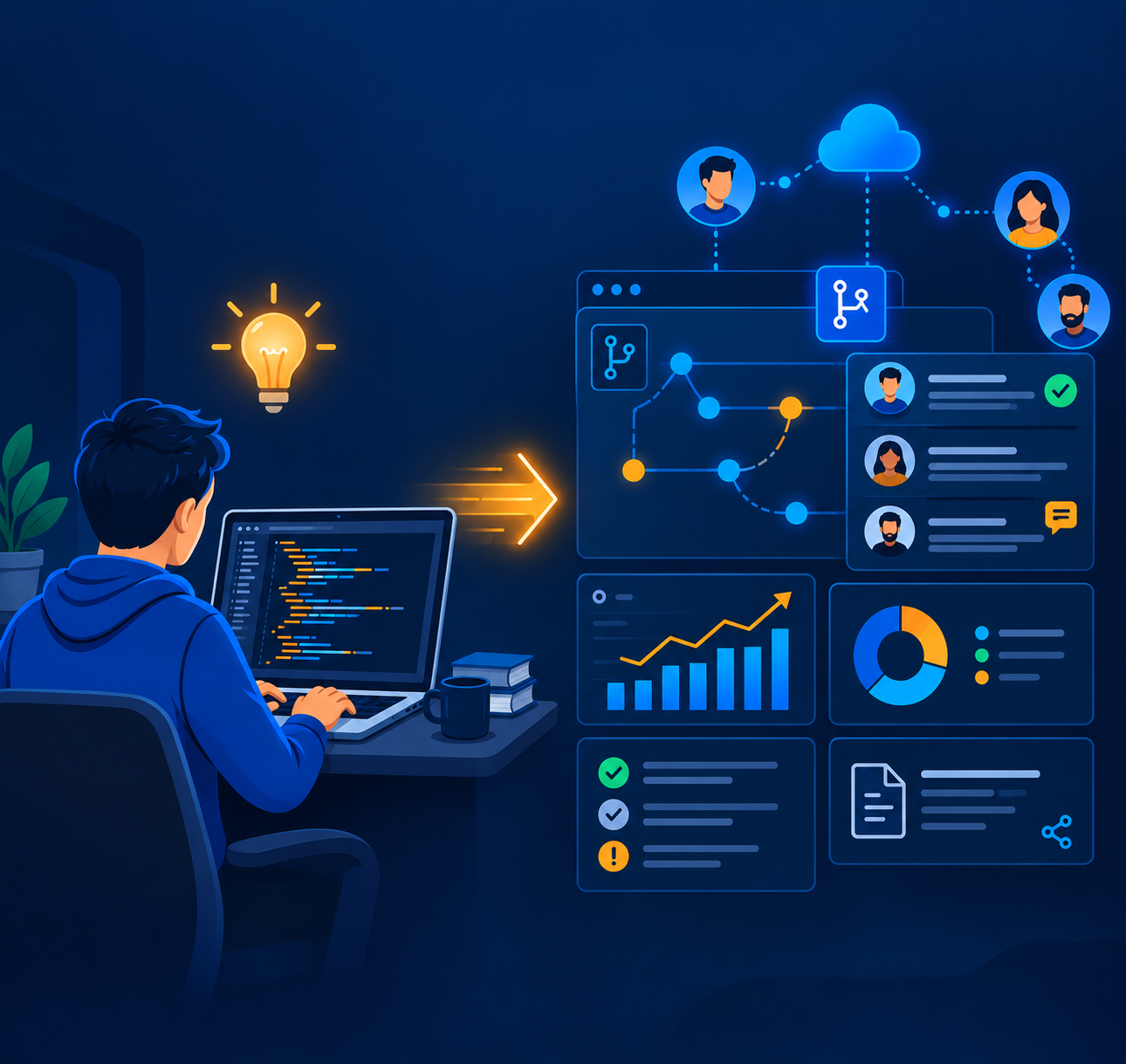
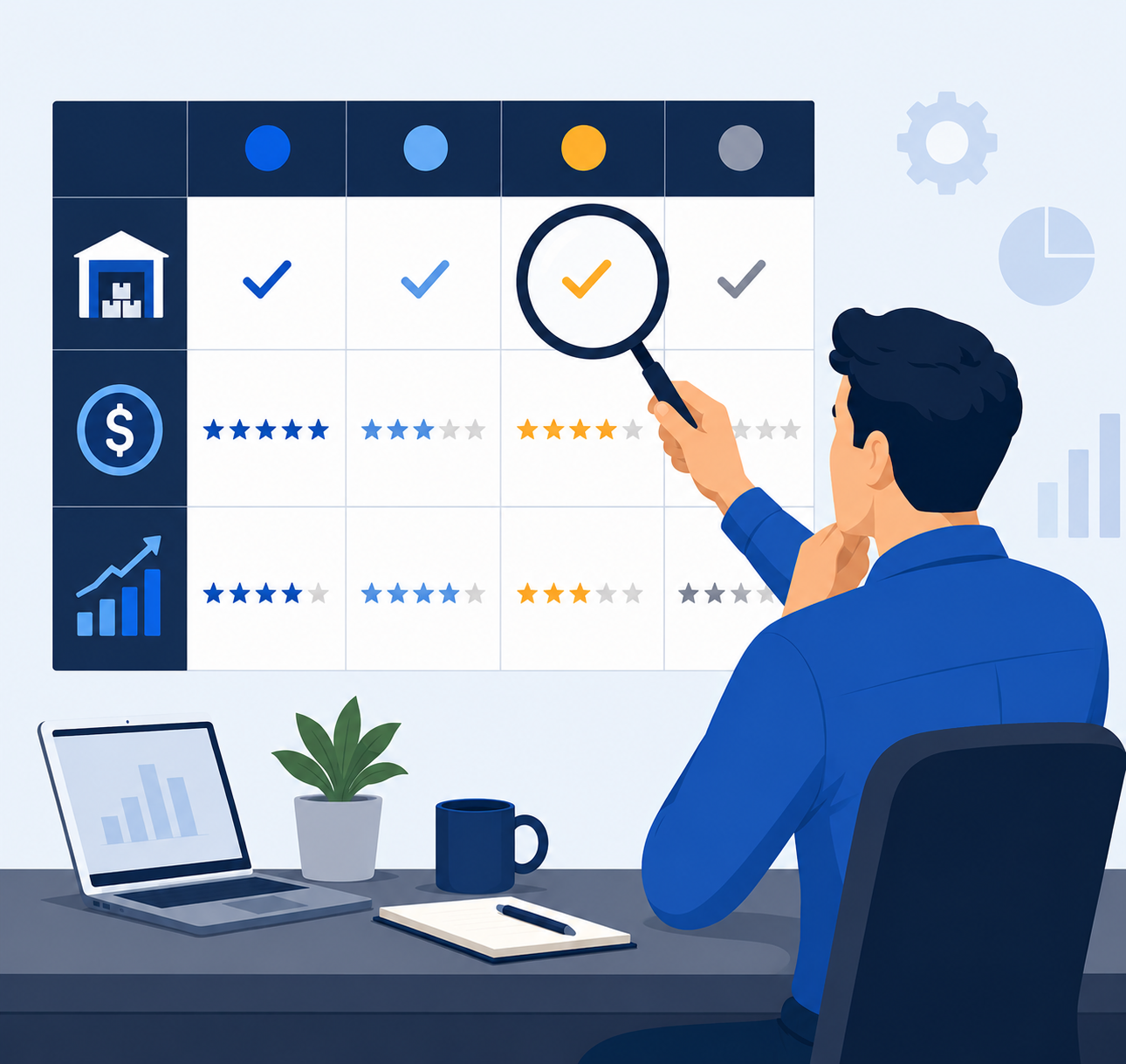
Most business owners assume ERP — Enterprise Resource Planning software — is something large corporations invest in. The kind of system that takes 18 months to implement, requires a dedicated IT team, and costs more than a year's payroll. That assumption is costing small and mid-size businesses more than they realize.
The Myth: ERP Is Only for Large Enterprises
Ten years ago, that assumption had some basis in reality. ERP systems were genuinely complex, expensive, and built for organizations with hundreds of employees and entire IT departments to manage them. The market catered to large enterprises, and everyone else made do with whatever tools were available.
That world has changed. Cloud-based ERP platforms have brought enterprise-grade operations management within reach of businesses with 20, 50, or 200 employees. Implementation timelines have shortened significantly. Pricing has scaled to reflect company size. And the systems themselves have become far easier to use — designed for business owners and operations teams, not just IT professionals.
The myth persists, but the reality has moved on.
What Actually Breaks When You Outgrow Spreadsheets
Most growing businesses run on a combination of accounting software, spreadsheets, and whatever communication tools their team has adopted — email, messaging apps, shared drives. At 10 or 15 employees, this works reasonably well. Everyone knows where things are. The owner has visibility because they are close enough to touch every part of the operation.
By the time you reach 30, 50, or 100 employees, the cracks become visible:
- Inventory figures differ between what sales believes is available and what the warehouse actually holds
- Purchase orders are raised without knowing what stock is already committed to customers
- Month-end reconciliation takes days — sometimes weeks — of senior management time
- Every department maintains its own version of the data, and the versions rarely match
- The business owner becomes the only person who can answer operational questions that should be visible to everyone
None of these problems feel critical in isolation. Each one is manageable, with enough manual effort. But together, they create a business that is working harder than it should to produce the same output — and one where the owner cannot step back without things beginning to slip.
What ERP Actually Does for a Small or Mid-Size Business
ERP software connects the parts of your business that currently operate in silos. Instead of separate systems for inventory, purchasing, sales, and accounting — each producing their own data that someone must then reconcile — ERP creates a single system of record that every department works from in real time.
In practical terms, this means:
Real-Time Visibility Across the Business
When a sales team member checks stock availability, they see the same number the warehouse sees — live, not from yesterday's report. When a purchase order is raised, it is immediately visible to the finance team. When a customer order is confirmed, the fulfillment team can act on it without waiting for an email or a phone call.
Elimination of Repetitive Manual Work
Tasks that currently require someone to re-enter data from one system into another — or to copy figures from a spreadsheet into an accounting tool — are handled automatically. The time saved is not trivial. Businesses that transition to ERP consistently find that their operations teams recover hours each week that were previously spent on data management rather than actual work.
Accurate, Trustworthy Reporting
Instead of end-of-month reports that are already outdated by the time they are ready, ERP provides management reporting that reflects the actual state of the business today — not last week. Business owners can make procurement, pricing, and staffing decisions based on data they can trust.
A Foundation for Sustainable Growth
Perhaps most importantly, ERP gives a growing business the infrastructure to scale without proportionally scaling its headcount. Adding a new location, a new product line, or a new sales region becomes a manageable exercise rather than an operational crisis.
The Hidden Cost of Waiting
The decision to delay ERP implementation is rarely made explicitly. It happens by default — the current system is working well enough, the timing never feels quite right, and the disruption of change feels harder than the friction of staying put.
But the cost of waiting is real, even if it is hard to see on a profit and loss statement:
- Every new employee gets trained on a broken process. The longer you wait, the more deeply embedded the workarounds become across the organization.
- Data quality deteriorates over time. Spreadsheets diverge, records become inconsistent, and eventual migration becomes harder and more expensive.
- Decisions made on unreliable data have compounding consequences. Stock over-purchased because visibility was poor. A customer lost because a delivery commitment could not be met. A margin that eroded because nobody caught it in time.
- Owner dependency increases rather than decreases. As the business grows without the right systems, the owner becomes more central to daily operations — not less. This is the opposite of what growth should deliver.
Businesses that implement ERP before the pain becomes acute consistently scale more smoothly than those that wait until the system is already breaking down around them.
How to Know If the Time Is Right
You do not need to be a large company to need ERP. You need to be a growing one. These are the signs that the timing is right:
- Your business has more than 20 employees and is adding headcount regularly
- You operate across more than one location, department, or legal entity
- Month-end closing takes longer than it should and involves significant manual reconciliation
- Your sales and operations teams are regularly working from different versions of the same information
- You cannot answer basic business questions — stock levels, open orders, margin by product — without asking someone or pulling a manual report
- Growth is creating more complexity than your current setup can handle cleanly
If three or more of these are true for your business, the question is no longer whether ERP makes sense. It is which system fits your operation and how to get started without disrupting what is already working.
If you've confirmed the timing is right, the next question is how to evaluate your options without being guided by a sales demo. We cover that in How to Choose the Right ERP for Your Business.
If you are at this stage and want to understand what ERP looks like in practice for a business your size, a 20-minute conversation is a good place to start — no obligation, no pitch, just a direct conversation about where your business is and what the right next step might be.
If you're a developer early in your career, our post on what every CS fresher needs to know before their first tech job covers the professional context that makes working on these systems much easier.